
Editorial · Tokenization
Tokenized real estate's best year and worst year, at once
8 slides, swipe or scroll. Download the deck (PDF). The full text is below.
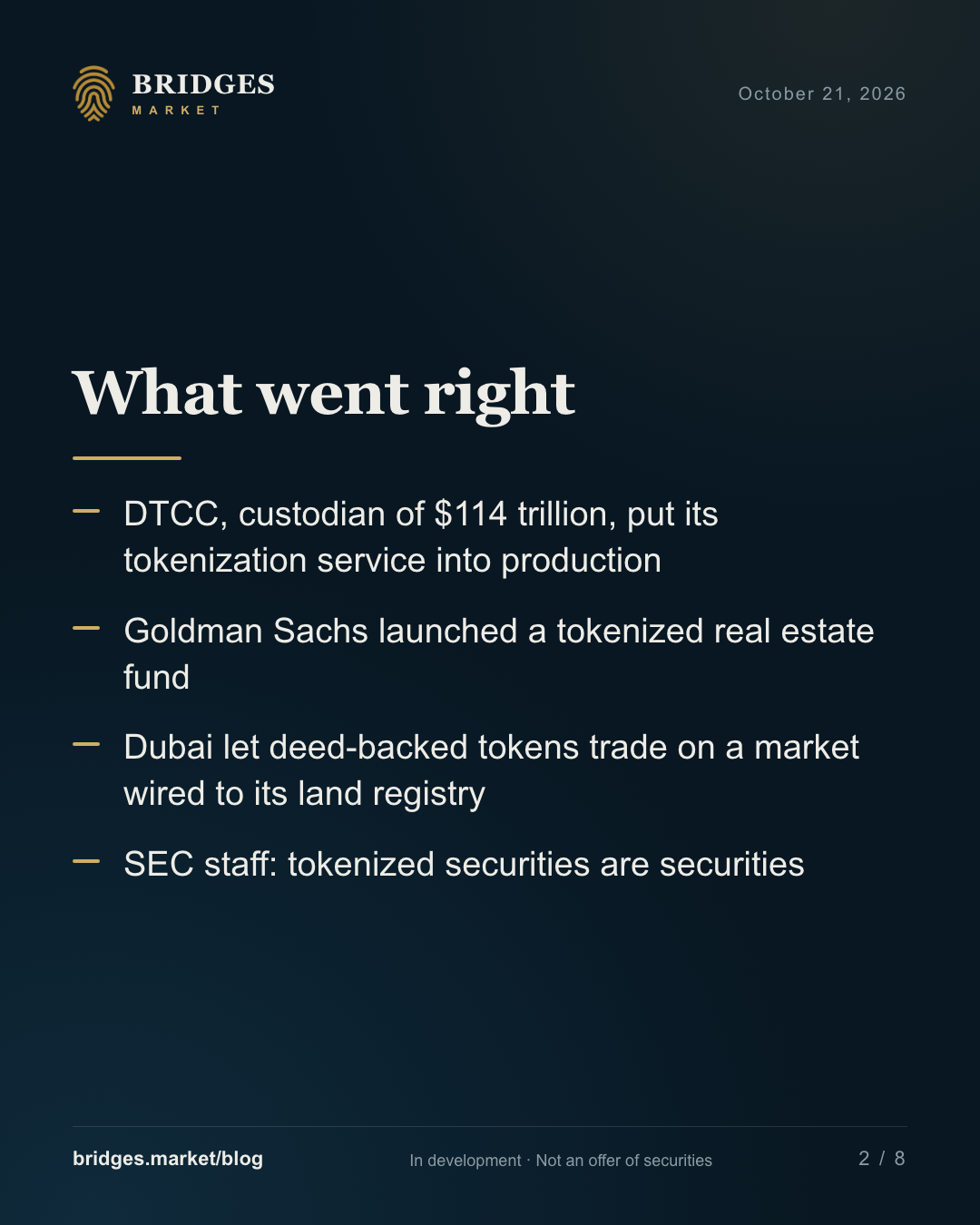
In the same twelve months: the largest securities depository in the world started tokenizing the assets it holds. Goldman Sachs launched a tokenized real estate fund. Dubai let tokenized property trade on a secondary market wired to its land registry. And the biggest tokenized real estate platform in the United States went into liquidation owing money to somewhere between 14,000 and 22,000 investors.
What went right. DTCC, custodian of more than $114 trillion, put its tokenization service into production this month with Bank of America, BlackRock, Citi, Goldman, J.P. Morgan and Morgan Stanley in the working group. In February, the Dubai Land Department opened a controlled secondary market where deed-backed tokens trade and every trade is synced to the registry. In January, SEC staff said tokenized securities are securities, full stop. None of this is a startup pitch. It's plumbing.
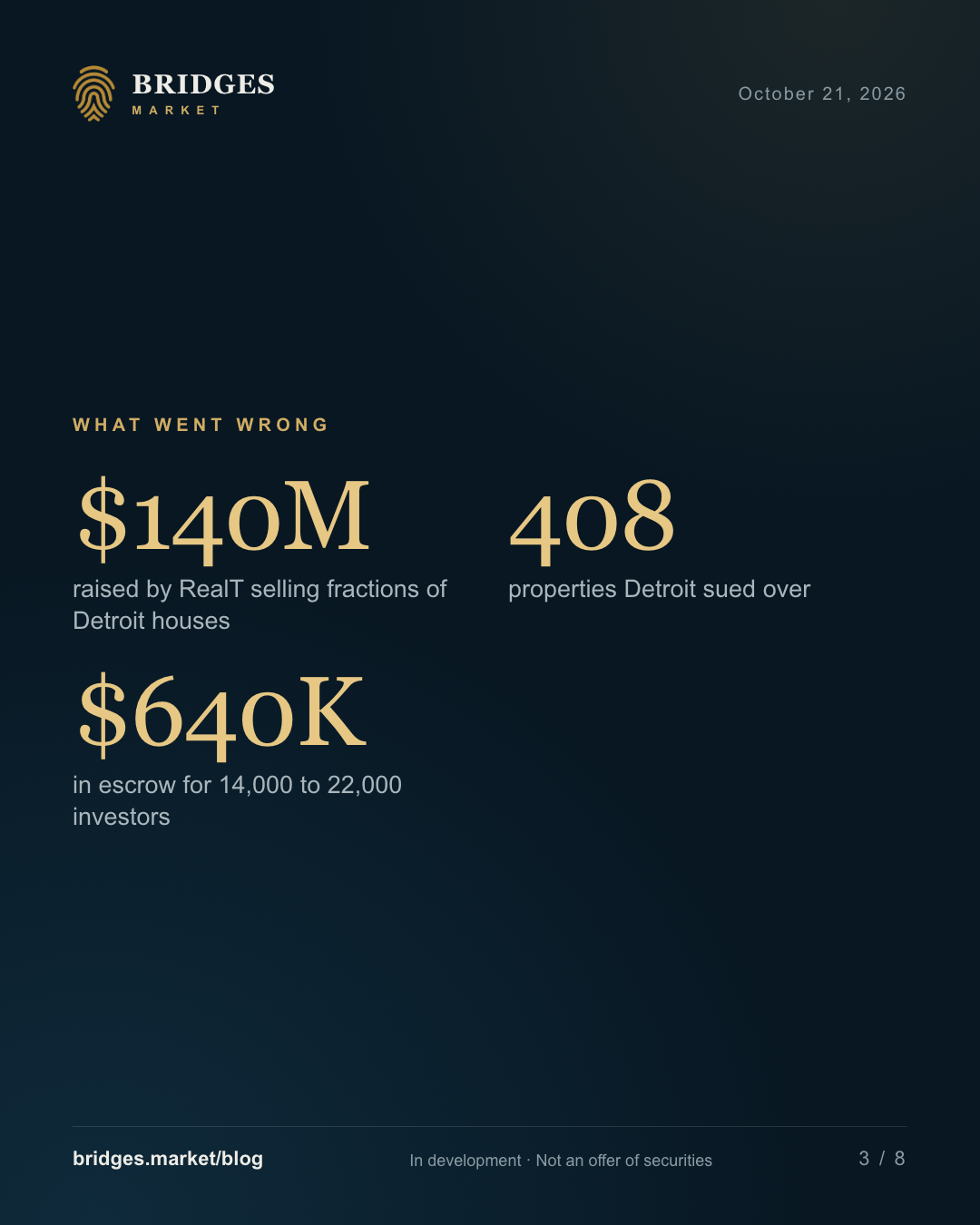
What went wrong. RealT raised about $140 million selling fractions of Detroit rental houses. Detroit sued over 408 properties it said lacked certificates of compliance. Rent distributions stopped. A court-appointed fiduciary came in. In July the founders announced voluntary liquidation, with roughly $640,000 in escrow for thousands of token holders.
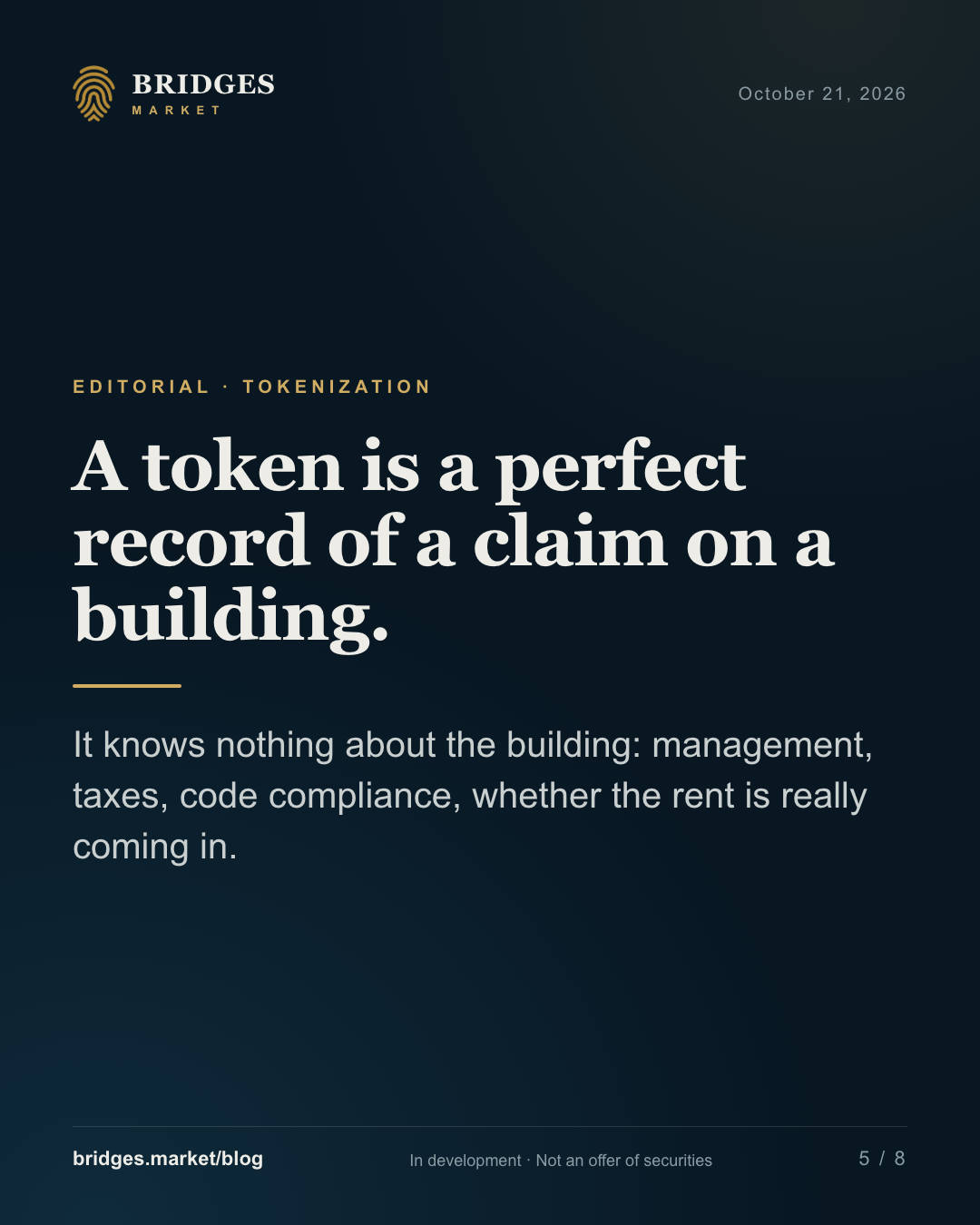
The point most of the coverage misses: the tokens worked. Every RealT token recorded who owned what. The failure was in everything the token can't see: management, taxes, code compliance, whether the rent was really coming in. A token is a perfect record of a claim on a building. It knows nothing about the building.
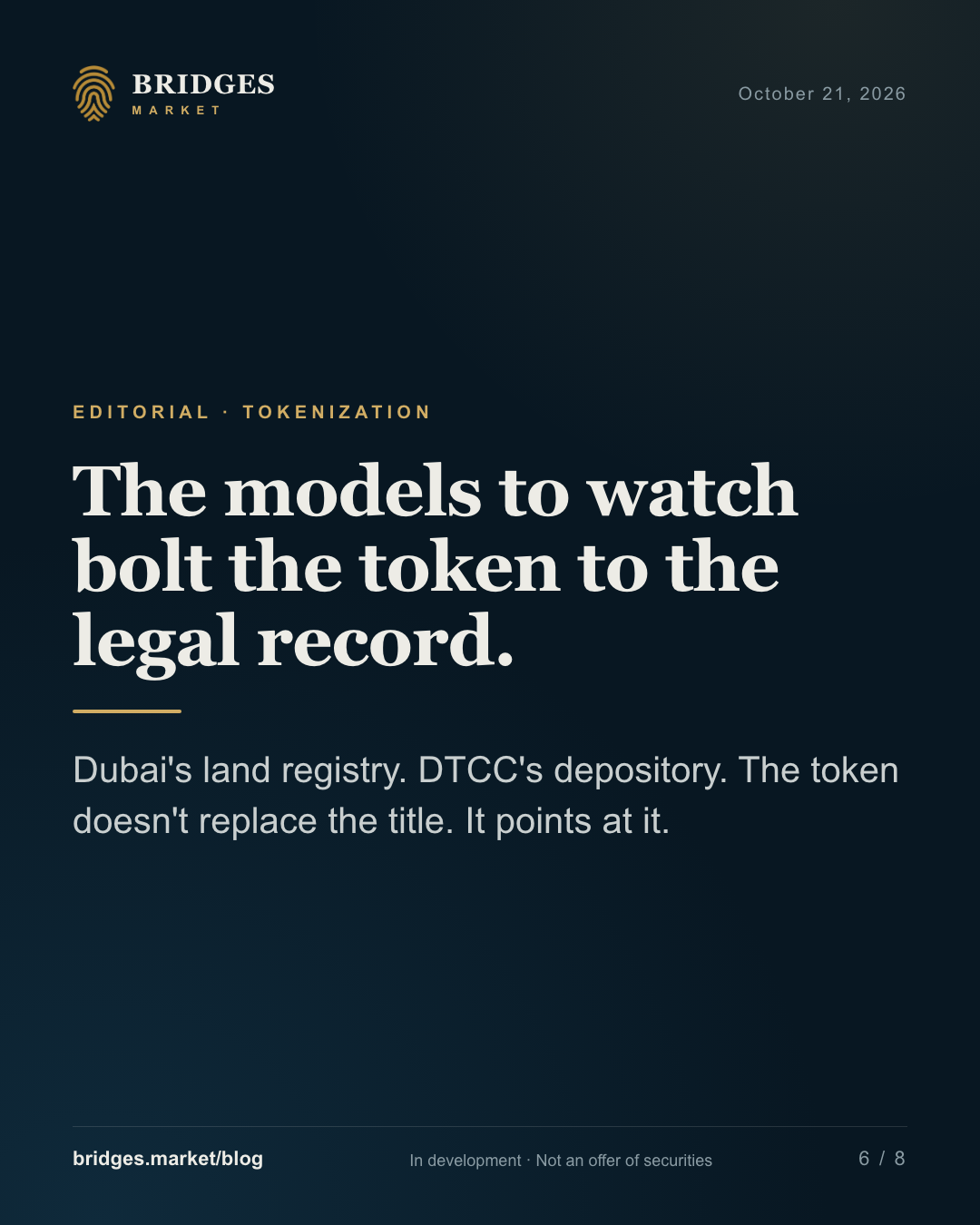
Which is why Dubai and DTCC are the models to watch. In both, the on-chain record is bolted to the legal record. The token doesn't replace the title. It points at it.
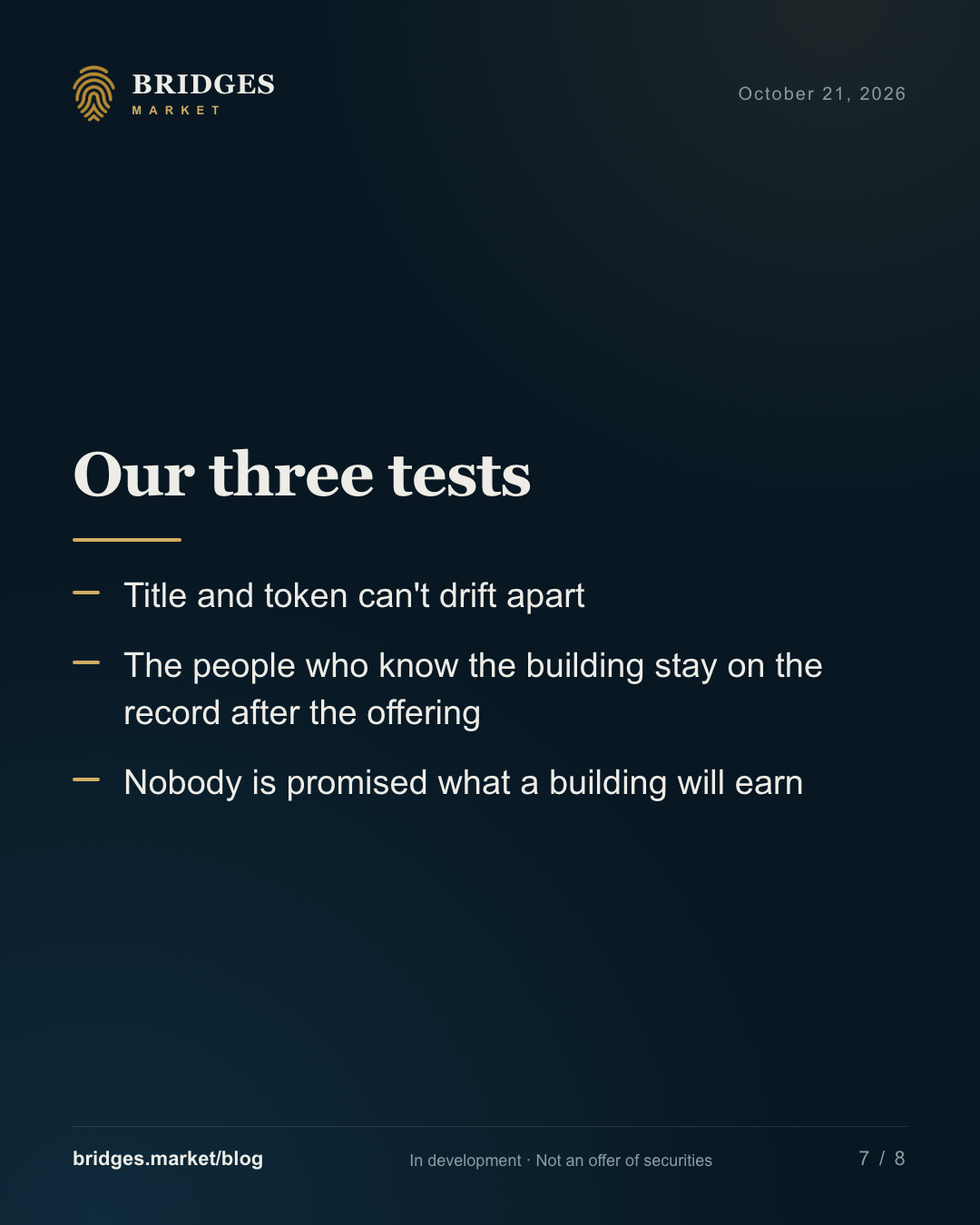
Our view at Bridges Market, which we are building and which is not live: tokenization earns trust when the title and the token can't drift apart, when the people who know the building stay on the record after the offering, and when nobody is promised what a building will earn.
The question for 2027 is not whether tokenization is coming. It is whether the people who know the property are inside the structure or outside it.
Early access: Request early access
- DTCC tokenization service: limited production July 2026, launch October 2026, 50-firm working group
- Goldman Sachs tokenized real estate fund with Apex, Archax, Ownera, LRC (June 4, 2026)
- Dubai Land Department opens secondary market for tokenized property (Feb 20, 2026)
- SEC staff statement: tokenized securities are securities (Jan 28, 2026)
- CLARITY Act clears Senate Banking Committee (May 2026)
- RealT liquidation: $140M raised, 14,000 to 22,000 investors, $640K escrow (July 2026)
- Detroit nuisance lawsuit, 408 properties
Bridges Market is in development. Everything described is planned, not yet available, and depends on legal, regulatory, and technical work still underway. Nothing here is an offer to sell, or a solicitation to buy, any security. Previews and figures are illustrative.