
Editorial · Liquidity
The illiquidity tax

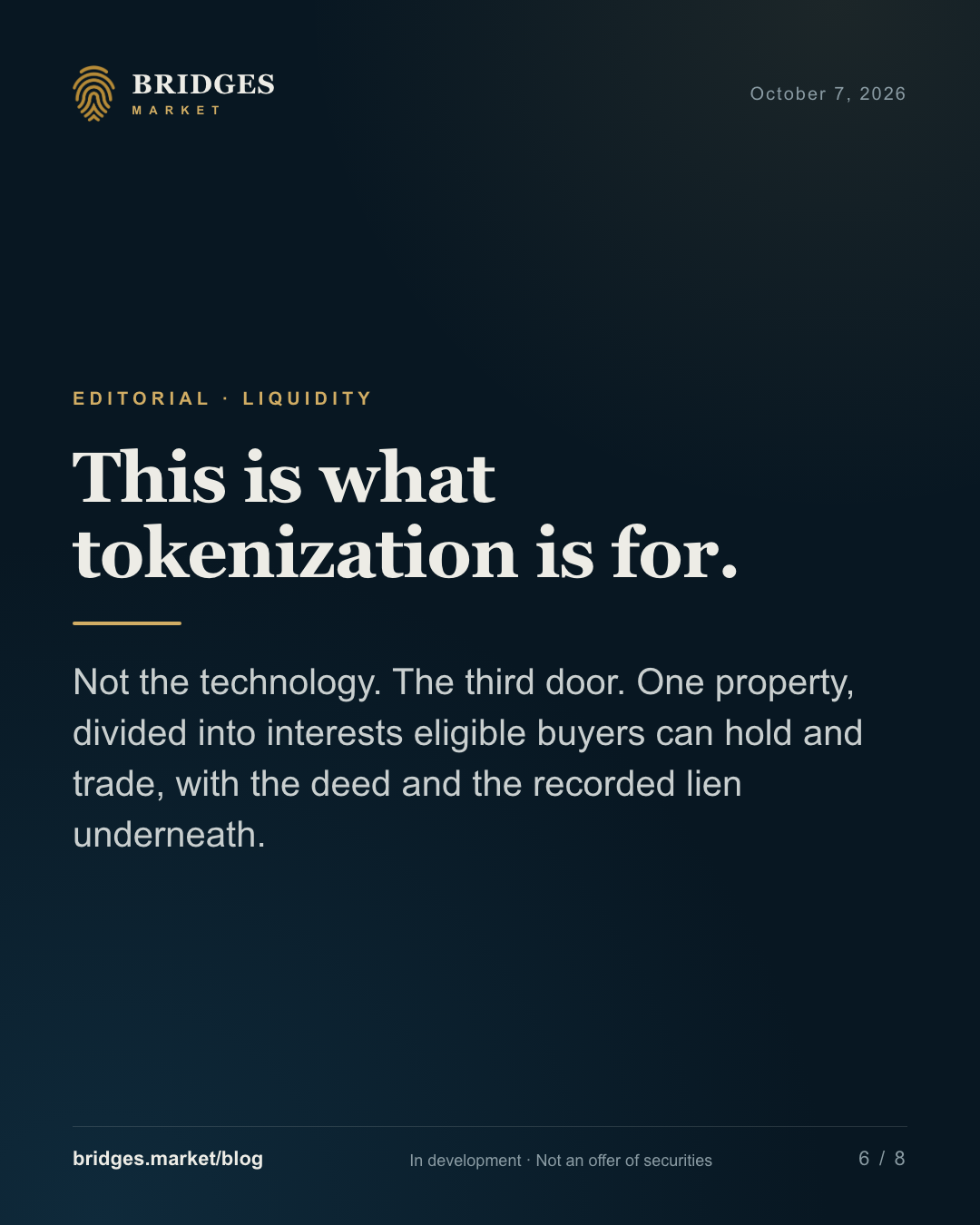

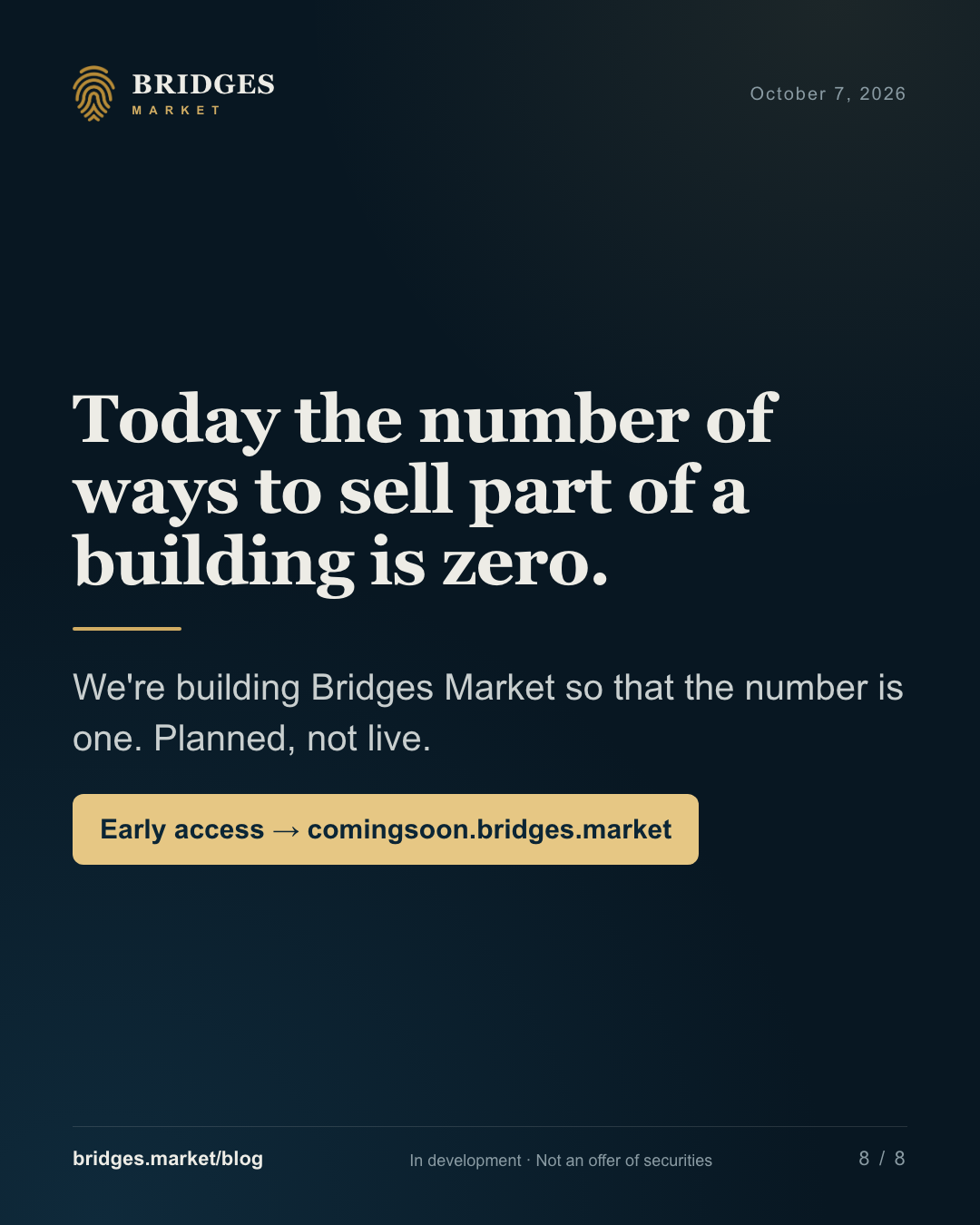
8 slides, swipe or scroll. Download the deck (PDF). The full text is below.
Nobody sends you an invoice for it. You pay it anyway.
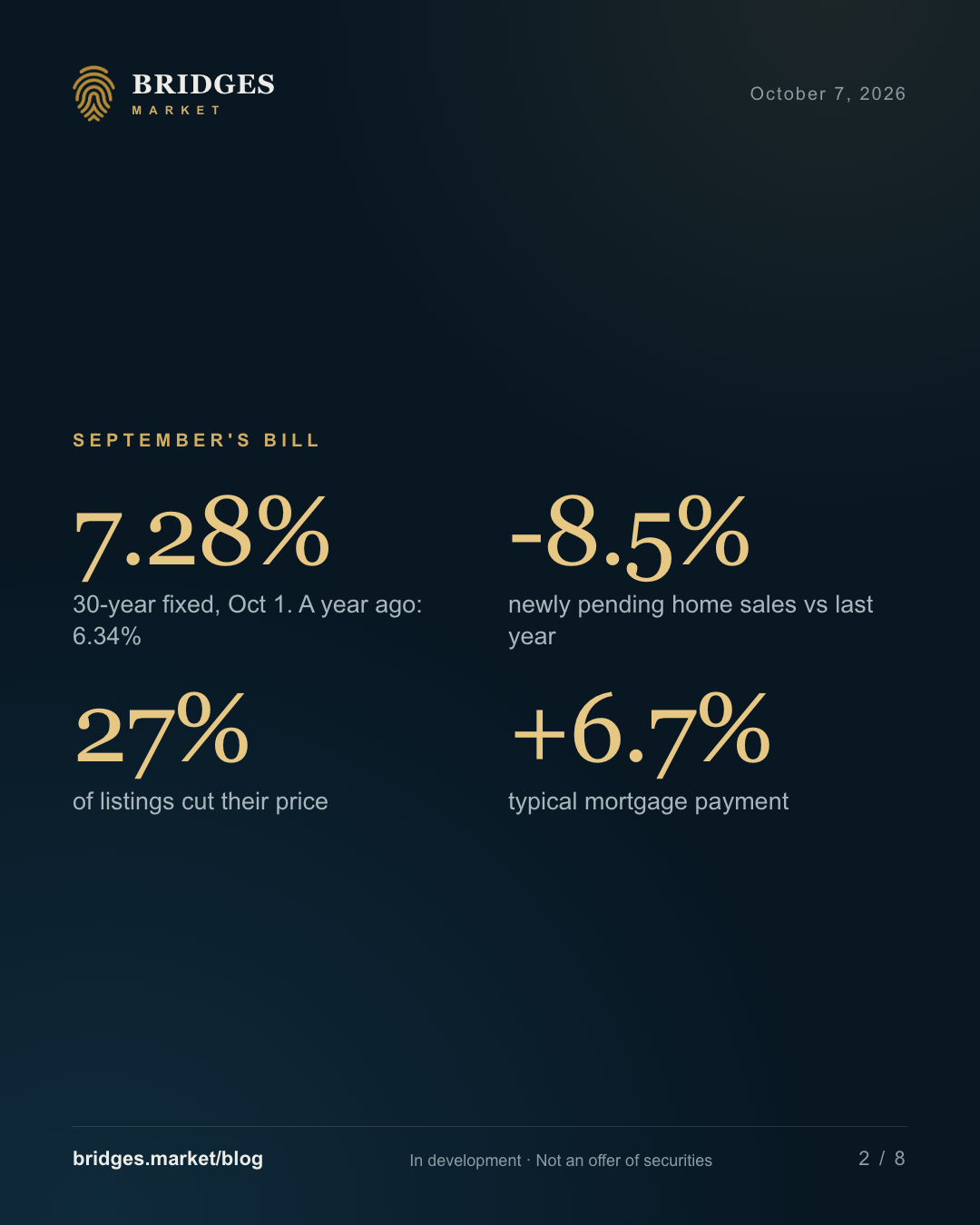
Here's the bill for September. The 30-year fixed hit 7.28 percent on October 1, up from 6.34 a year ago, after the Fed raised rates for the first time since 2023. Newly pending home sales fell 8.5 percent from last year. More than a quarter of listings cut their price. There are 1.39 million homes for sale and the typical mortgage payment is up 6.7 percent. The for-sale market is, in Zillow's phrase, in early winter.
Meanwhile rents hit a record. People are not leaving housing. They're stuck in it.
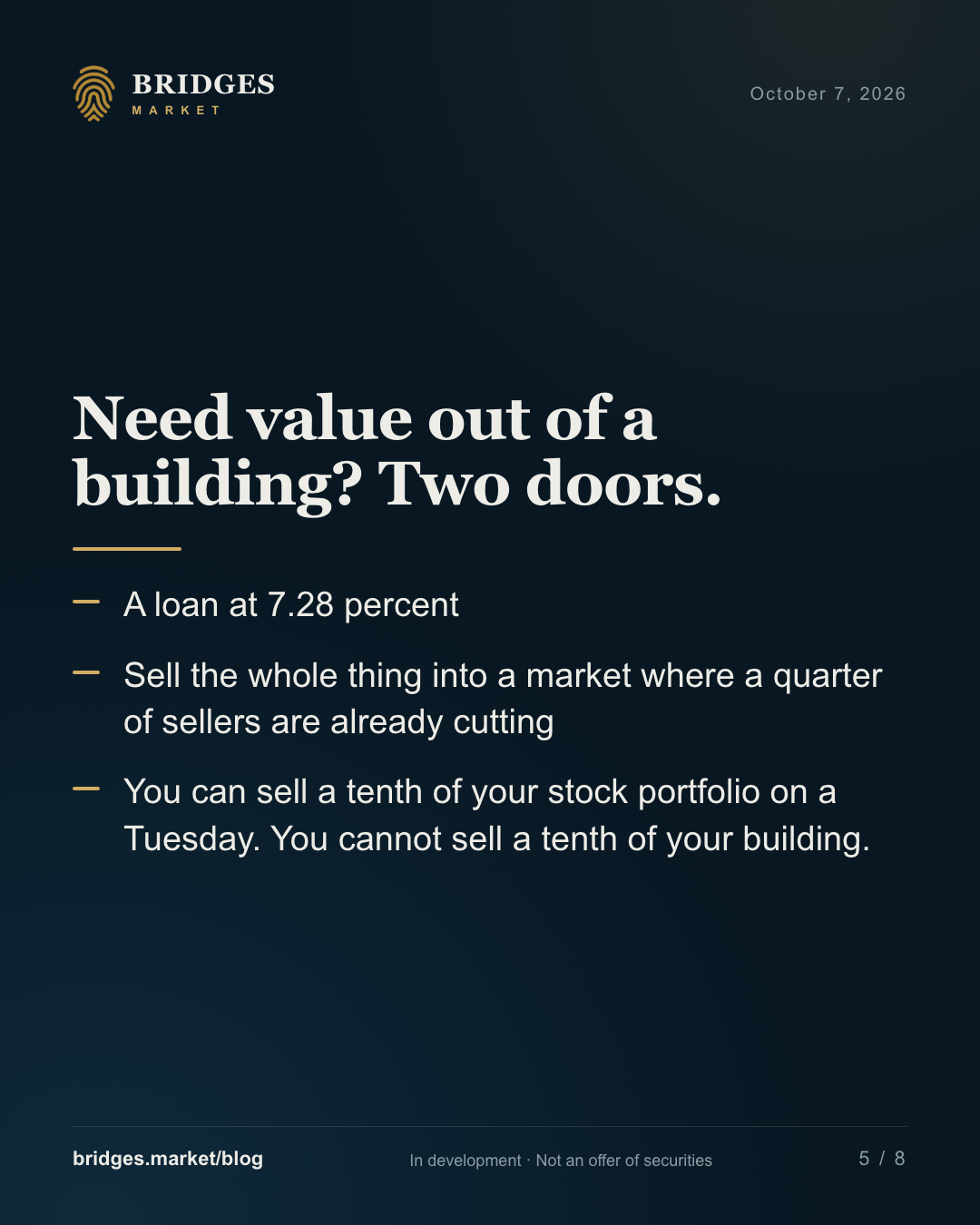
That's the illiquidity tax. Real estate is the most valuable thing most people own, and the one thing they can't sell a piece of. Need some of the value out of a building? Your options are a loan at 7.28 percent, or a sale of the whole thing into a market where a quarter of sellers are already cutting. There is no third door. You can sell a tenth of your stock portfolio on a Tuesday afternoon. You cannot sell a tenth of your building.
This is what tokenization is actually for. Not the technology. The third door.
Divide one property into interests that eligible buyers can hold and trade, with the deed and the recorded lien underneath, and an owner can free up part of the value without selling the whole thing or borrowing against it at the worst rate in a decade. A buyer can take a piece of a building in a city they'd never afford whole. The agent who knows the building stays on the record for every trade, not just the first one.
Now the honest part. A tokenized interest is not automatically liquid either. It's liquid when there are buyers, and in a market where there are rules about who those buyers can be. We won't tell you how often tokens will trade, because nobody can. What we can say is that today the number of ways to sell part of a building is zero, and we're building Bridges Market, which isn't live, so that the number is one.
The illiquidity tax has been collected for as long as there have been deeds. It is the first tax we'd like to see cut.
Owners: if you've paid it, we want to hear what the third door would need to look like: Request early access
Bridges Market is in development. Everything described is planned, not yet available, and depends on legal, regulatory, and technical work still underway. Nothing here is an offer to sell, or a solicitation to buy, any security. Previews and figures are illustrative.